


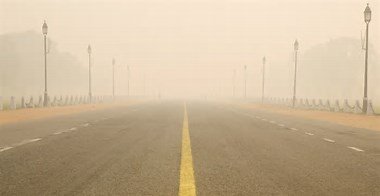
Pakistan is grappling with a severe surge in air pollution, which has seen several cities ranked among the world’s most polluted. The situation is particularly dire in Punjab, where hazardous levels of smog are wreaking havoc on public health and daily life. Multan, the largest city in southern Punjab, recorded a staggering Air Quality Index (AQI) reading of 2,135 early on November 8, far exceeding the hazardous threshold of 300. The concentration of PM2.5 — fine particulate matter linked to numerous health issues — was a record-breaking 947 micrograms per cubic meter, a shocking 189 times higher than the World Health Organization’s (WHO) recommended safe limit.
As the region grapples with these alarming pollution levels, the Punjab government has issued emergency orders to combat the smog. Affected areas, including Lahore, Gujranwala, Faisalabad, Multan, Sheikhupura, and several other districts, have been instructed to close schools, amusement parks, and museums from November 8 to 17. The government has also mandated the shutdown of private and public tuition centers and educational academies across these areas during this period.
In Multan, the AQI continued to worsen throughout the day, reaching 980 by 10 p.m., signaling hazardous air quality. Air quality monitors stationed in various locations across the city, including WWF-Pakistan and Multan Cantonment, showed similarly alarming readings of 2,316, 1,635, and 1,527, respectively. The city’s air pollution has been aggravated by low wind speeds, which have hindered the dispersal of the toxic smog, making conditions even more unbearable for residents.
Multan’s pollution woes are not unique; other major cities, including Lahore, Peshawar, Islamabad, Rawalpindi, and Karachi, are also experiencing hazardous air quality. Lahore, in particular, has been engulfed by toxic smog for several days, with AQI levels frequently surpassing 1,000. The city’s pollution levels reached an all-time high on November 7, when Lahore topped global pollution rankings with an AQI of 1,165, over 120 times the WHO’s safe level.
As the situation worsens, healthcare facilities in Lahore and surrounding cities have reported an increase in respiratory illnesses. Hospitals are being overwhelmed by patients suffering from conditions exacerbated by the toxic air, including asthma, bronchitis, and other lung-related diseases.
Meteorologists have warned that the air quality may continue to deteriorate, as wind speeds are expected to remain low throughout the week. The Punjab government has set up a panel to oversee preventive measures and coordinate the response to this environmental crisis.
The widespread impact of this pollution underscores the urgent need for long-term solutions to address the root causes of air pollution in Pakistan. Experts point to industrial emissions, vehicle exhaust, and the burning of crop residue as key contributors to the toxic smog. As the country faces one of its worst air quality crises in recent years, it is clear that immediate action and sustained efforts are needed to protect public health and restore breathable air for its citizens.
Sources By Agencies
