


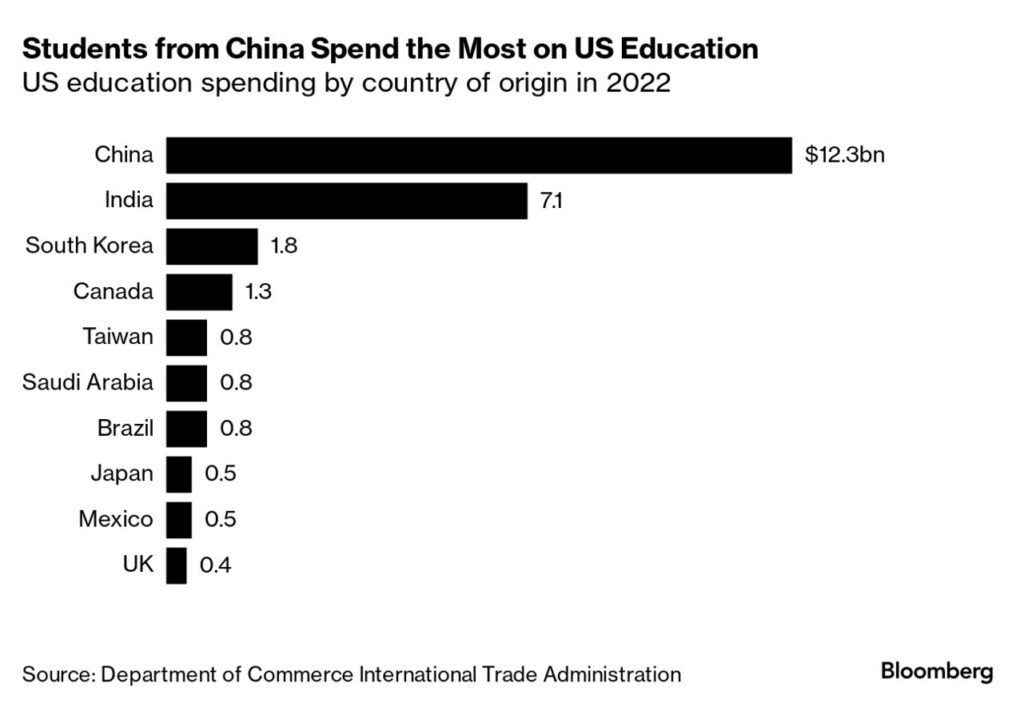
In a remarkable rebound, the number of international students at US colleges and universities has surged by 12% in the 2022-2023 academic year, reaching nearly 1.06 million students, according to Open Doors data from the Institute of International Education. This resurgence, nearing 2019 levels, is attributed to a significant influx of Indian students, offsetting a decline in Chinese enrollments.
“While foreign enrollment faced a setback in 2020 due to lockdowns, demand is making a strong comeback. The US remains the preferred destination for international students worldwide,” stated Allan E. Goodman, CEO of the Institute of International Education.
Indian students played a pivotal role in this resurgence, with their numbers increasing by an impressive 35%, reaching approximately 269,000 students in the 2022-2023 school year. This surge allowed India to catch up with the number of students from China, which remained flat at around 290,000. Although Chinese students still constitute the largest foreign nationality on US campuses, middle-income Chinese families are exploring alternative, more affordable destinations like the UK and Australia, or choosing not to pursue foreign degrees at all.
Factors contributing to the heightened interest among young Indians in US universities include India’s growing economy, expected to achieve a 6.3% growth rate this year and the next, according to the World Bank. Rising incomes make wealthier families more inclined to send their children abroad for better career prospects. Moreover, obtaining a foreign degree can enhance social status and marriage prospects for low and middle-income families, who may lack comparable education options domestically.
While concerns around visa restrictions and safety during the Trump administration led some Indian students to reconsider studying in the US, improved US-India relations have contributed to a resurgence in enrollments. India’s current status as the world’s most populous country, with half of its population under the age of 30, further underscores the potential for sustained growth in international student numbers.
In contrast, China’s slowing economic growth has dampened enthusiasm for education abroad, coupled with apprehensions about US-China relations, anti-Chinese sentiments, and safety concerns in the US. Families from smaller Chinese cities are particularly worried about tensions and costs, leading to a shift in preferences toward alternative Asian destinations such as Singapore, Hong Kong, or Malaysian universities, according to Zhou Huiying, founder of Shanghai-based consultancy Lideyouwei Education Technology.
Sources By Agencies
