


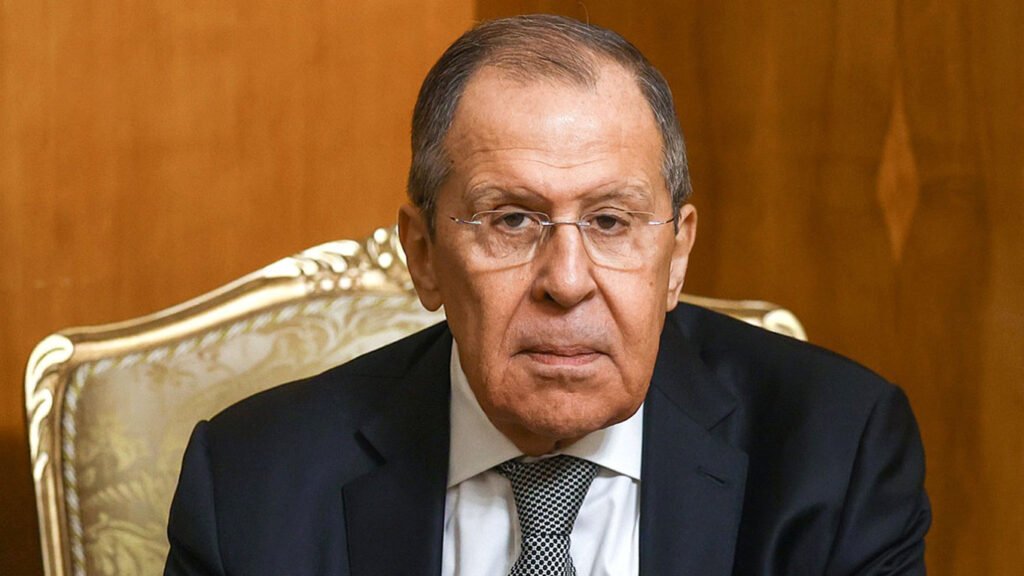
In a statement that has raised eyebrows and international concerns, Russia’s Foreign Minister, Sergei Lavrov, has declared Russia’s “high value” for North Korea’s support in its military operation in Ukraine. Lavrov’s remarks were made during his visit to Pyongyang, where he embarked on a two-day diplomatic mission expected to pave the way for an upcoming visit by Russian President Vladimir Putin.
The foreign minister’s visit to North Korea comes on the heels of North Korean leader Kim Jong Un’s recent journey to Russia for a historic face-to-face meeting with Putin. This meeting marked Kim’s first international trip since the outbreak of the pandemic.
Lavrov, who arrived in Pyongyang from Beijing, expressed Russia’s gratitude, stating, “We highly value your principled, unambiguous support for Russia’s actions in connection with the special military operation in Ukraine,” as reported by Russia’s RIA news agency.
While these statements underscore the deepening relationship between the two nations, concerns are mounting in Western capitals regarding the extent of their military ties. Kim’s high-profile summit with Putin prompted speculation that North Korea might supply Moscow with weaponry for its protracted conflict in Ukraine.
Just days ago, the United States raised alarm over arms shipments between North Korea and Russia. Reports indicated that North Korea had delivered over 1,000 containers of military equipment and munitions to Russia in recent weeks. The shipments were met with concerns over the potential assistance North Korea was seeking in return, including advanced military technologies.
According to information provided by the White House, containers were transported from North Korea to Russia by sea between September 1 and October 1. Subsequently, they were moved by rail to an ammunition depot located approximately 290 kilometers (180 miles) from the Ukrainian border.
However, the Kremlin has refuted these claims, asserting that the United States has not presented any concrete evidence of such weapon shipments. Dmitry Peskov, a spokesperson for the Kremlin, dismissed the reports, stating, “They report this all the time, without providing any proof.”
Meanwhile, analysts based in Washington have released satellite images that show a considerable build-up of train traffic along the Russian-North Korean border, signaling potential arms and munitions transfers from North Korea to Russia. While Russia has increased its shell production, experts believe it may still fall short of its battlefield requirements.
Both Russia and North Korea are grappling with international sanctions. Russia faces sanctions for its invasion of Ukraine, while North Korea confronts sanctions due to its nuclear weapons testing. These constraints have led to a strengthening of their alliance, even as relations between North and South Korea have reached a historic low, with North Korea conducting an unprecedented series of weapons tests this year and affirming its nuclear state status in its constitution.
In response to these developments, South Korea has bolstered its security relationship with the United States while forging a new trilateral arrangement with Japan. This shift is further exemplified by the recent landing of a US B-52 bomber, capable of carrying nuclear weapons, at Cheongju Airport in South Korea. It is the first time a B-52 has landed in the country since at least 2000, as noted by Yonhap news agency, marking a significant development in the ongoing geopolitical dynamics in the region.
Sources By Agencies
