


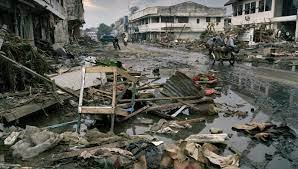
Nineteen years have passed since the cataclysmic events of December 26, 2004, when the world witnessed one of the deadliest disasters in recent history. The 2004 Indian Ocean earthquake and tsunami, also known as the Sumatra-Andaman earthquake or the Boxing Day tsunami, reverberated across multiple nations, claiming the lives of over 230,000 people in Indonesia, Sri Lanka, India, Thailand, and several other countries.
On that fateful morning after Christmas, a seismic jolt measuring 9.1 on the Richter scale off the coast of northern Sumatra triggered waves towering as high as 17.4 meters (57 feet), devastating vulnerable coastal areas across the region. Charles Ammon, Associate Professor of Geosciences at Penn State University, reflected on the sheer global impact of the earthquake, emphasizing how it resonated worldwide, causing the entire planet to tremble.
Following the tsunami’s wrath, the death toll continued to climb, leaving a haunting aftermath of destruction. Reports emerged of streets strewn with bodies, overwhelmed hospitals and morgues struggling to manage the influx of injured victims and the grim sight of bloated corpses waiting to be attended to.
Indonesia bore the brunt of the disaster, witnessing the swallowing of vast coastlines, displacing around 570,000 individuals, and demolishing 179,000 homes and structures. In India, particularly in Chennai, approximately 10,000 lives, predominantly women and children, were lost to the merciless waves. Sri Lanka faced staggering losses, with nearly 40,000 casualties, while Thailand mourned the deaths of almost 5,400 individuals, including numerous foreign tourists.
Spanning a 900-mile stretch, the rupture of the Australian and Indian plates unleashed a seismic force of incomprehensible magnitude. The earthquake, occurring 31 miles below the ocean’s surface, released energy equivalent to multiple atomic bombs detonating over ten relentless minutes, rather than a single powerful shock, as revealed by experts.
In the wake of this solemn anniversary, individuals took to various platforms, including social media, to honor the memory of the victims and reflect on the resilience exhibited in the face of such adversity. Messages shared online served as poignant reminders of the countless families shattered by this tragedy and urged collective efforts to create a world better equipped to respond to and prevent such calamities.
“Today marks 19 years since that calamitous disaster, a reminder of the countless families forever affected. My heartfelt tribute to all those impacted by this devastation,” expressed a user.
Another poignant message read, “26 December always takes me back to 2004, the monumental disaster etched in our memories.”
“Remembering the lives lost in the devastating 2004 tsunami. Let us honor their memory, contemplate resilience, and stand together in solidarity. May we never forget and persist in building a world prepared for such tragedies,” shared a compassionate individual.
As the world pauses to remember the harrowing events of December 26, 2004, it stands as a testament to the resilience of communities and the imperative to remain vigilant and prepared against the specter of natural disasters. It’s a moment to pay homage to the lives lost, acknowledge the impact endured, and collectively strive towards a safer, more resilient world.
Sources By Agencies
