


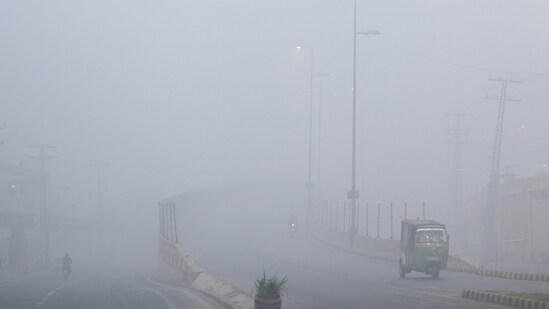
Severe smog has engulfed Pakistan’s Punjab region, pushing Multan’s air quality index (AQI) beyond 1,900, making it the most polluted city in the world. The smog crisis has triggered public health warnings, road closures, and the shutdown of public spaces and schools as authorities scramble for solutions.
According to a report by news agency ANI, Multan’s AQI peaked at an alarming 2,000 on Friday morning. Lahore followed closely with AQI readings of 760, adding to Pakistan’s urgent air quality challenges. As reported by Dawn, citizens in these heavily polluted areas are facing heightened respiratory risks, yet compliance with mask-wearing guidelines remains low.
The smog in Lahore has led to widespread road closures for the second consecutive day. Low visibility caused multiple accidents, including a serious collision on GT Road near Kalashah Kako that left nine people injured when a van collided with a truck.
In response to the crisis, the Lahore High Court has mandated that markets and trading activities remain closed on Saturday and must conclude by 8 p.m. on other days until further notice. Further measures across Punjab include the closure of parks and museums until November 17, along with all tuition centers, private academies, and public schools through the same date.
IQAir reports that Multan’s levels of PM2.5 – the harmful particulate matter known to cause serious respiratory and cardiovascular issues – reached 947 micrograms per cubic meter, over 189 times higher than the World Health Organization’s recommended safe levels.
The Punjab government has declared a high alert and is implementing emergency measures to combat pollution levels. These include limitations on vehicle emissions, restrictions on burning crop stubble, and tighter regulations for industrial emissions. The persistent and hazardous pollution levels have left Pakistan’s citizens concerned about the country’s air quality, with calls for urgent and sustainable action to address the environmental crisis.
Sources By Agencies
