


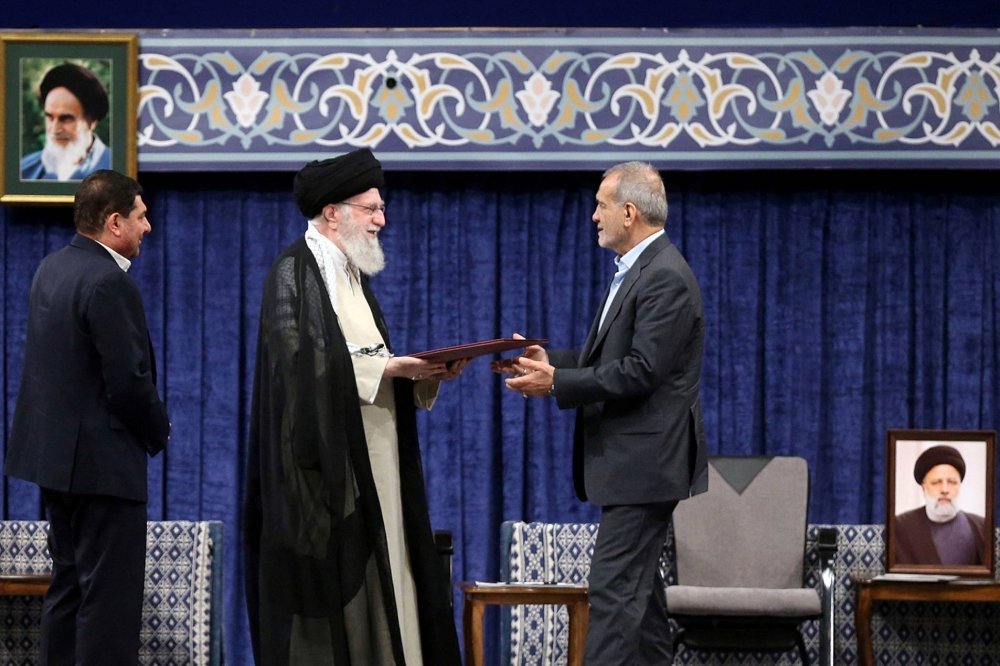
In a significant political development in Iran, Supreme Leader Ayatollah Ali Khamenei officially endorsed Masoud Pezeshkian as the country’s new president on Sunday. Pezeshkian, a reformist candidate, emerged victorious in recent snap elections, securing over 16 million votes, approximately 54% of the total ballots cast. The endorsement was announced by Khamenei’s office and marked by a formal ceremony in Tehran, attended by senior Iranian officials and foreign diplomats.
New Leadership in Iran
The endorsement of Pezeshkian, a heart surgeon and longstanding member of parliament for Tabriz, comes after a runoff election on July 5, in which he defeated ultraconservative Saeed Jalili. This election was necessitated by the sudden death of President Ebrahim Raisi in a helicopter crash in May. The voter turnout for the runoff was 49.8%, a notable increase from the 40% turnout in the first round.
During the endorsement ceremony, Khamenei praised Pezeshkian as a “wise, honest, popular, and scholarly” choice for president, appointing him to lead the Islamic Republic of Iran. Pezeshkian is scheduled to be formally sworn in before parliament on Tuesday.
Key Appointments and Policy Directions
Following the ceremony, Pezeshkian appointed Mohammad Reza Aref as his first vice president. Aref, who previously served as first vice president and communications minister under reformist President Mohammad Khatami, brings substantial experience to the new administration. Pezeshkian, having served as Khatami’s health minister, has pledged to tackle significant national and international challenges, including regional tensions and economic difficulties exacerbated by ongoing sanctions.
In his acceptance speech, Pezeshkian expressed gratitude to Khamenei and the Iranian people, committing to address the “heavy burden” of his presidency. He emphasized the need for an “active and effective” response to regional developments and stressed a diplomatic focus on neighboring countries.
Challenges Ahead
The new administration faces numerous challenges, including heightened regional tensions since the Gaza conflict began, disputes over Iran’s nuclear program with Western powers, and widespread domestic discontent due to the impact of international sanctions. Pezeshkian has indicated a desire to revive the 2015 nuclear deal with the United States and other world powers, a pact that collapsed in 2018 following the U.S. withdrawal.
Khamenei’s comments during the ceremony reflected a cautious stance towards Europe, noting past grievances and advocating for improved relations if Europe changes its attitude. Pezeshkian’s campaign also highlighted the need for constructive relations with European countries, despite criticisms of their handling of sanctions mitigation.
Sources By Agencies
