


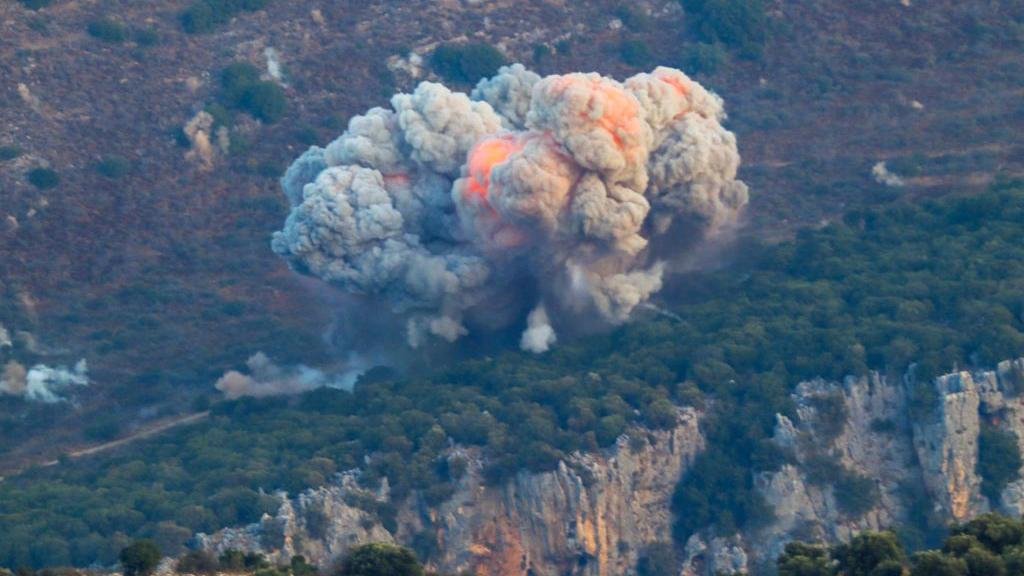
In a dramatic escalation of violence, Lebanon-based militant group Hezbollah fired 165 rockets at northern Israel on Monday, injuring at least seven people, including a one-year-old girl, according to reports from The Times of Israel. The attacks came just one day after Israeli Prime Minister Benjamin Netanyahu acknowledged his country’s involvement in a controversial operation targeting Hezbollah in Beirut. Netanyahu confirmed his approval of the September pager attack, which Hezbollah had blamed Israel for.
The rocket fire struck various locations in northern Israel, including the Galilee Medical Center in Nahariya, where 50 rockets were aimed. The attack injured several civilians, including a 27-year-old woman and a 35-year-old man who were injured by shrapnel in the town of Bi’ina. They were both transported to the medical center. The violence extended to the Karmiel area, with Hezbollah claiming responsibility for targeting a training base for the Paratroopers Brigade in the Karmiel settlement.
The escalation continued with an assault on Haifa, Israel’s third-largest city, where Hezbollah launched 90 rockets in two separate barrages. The first batch of 80 rockets was largely intercepted by the Israel Defense Forces (IDF) air defense systems, but several towns still sustained damage. The second round of 10 rockets was either intercepted or fell in open areas, avoiding direct hits.
In response, the IDF launched a counterattack, with an Israeli drone destroying a Hezbollah rocket launcher used in the Haifa assault.
The ongoing conflict has raised alarms about the increasing volatility of the region, with tensions between Israel and Hezbollah reaching new heights. Netanyahu’s recent admission regarding the Beirut attack has further intensified the already fragile situation, with both sides continuing to exchange blows. The ongoing rocket fire and retaliatory strikes mark one of the largest attacks in recent weeks amid the conflict. The situation remains dire, with the potential for further escalation if diplomatic interventions fail to take hold.
Sources By Agencies
