


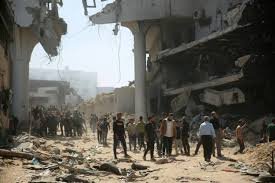
A recent report from the World Bank, in collaboration with the United Nations and the European Union, reveals the devastating impact of the Israel-Hamas conflict on Gaza’s critical infrastructure. The report estimates that the war has caused approximately $18.5 billion in damage to vital infrastructure in Gaza.
The assessment, covering the period from the onset of the conflict in October to the end of January, highlights the extensive structural damage across all sectors of Gaza’s economy. A staggering 70 percent of the estimated costs stem from the destruction of housing, underscoring the humanitarian crisis unfolding in the region.
The conflict, which began with Hamas’s attack on October 7, resulted in a significant loss of life on both sides. The report notes about 1,160 civilian deaths in Israel and over 32,000 deaths in Gaza, with a majority being women and children, according to Gaza’s health ministry.
The Israeli military’s response, characterized by heavy aerial bombardment and ongoing ground operations, has left large parts of Gaza in ruins, with millions of tons of debris created as a result. This has severely impacted essential services, including health facilities and education, leaving a significant portion of Gaza’s population displaced and without access to basic necessities.
Key findings from the report include:
- More than half of Gaza’s population is on the brink of famine, facing acute food insecurity and malnutrition.
- 84 percent of Gaza’s health facilities have been damaged or destroyed, exacerbating the healthcare crisis.
- Three-quarters of Gaza’s population have been displaced, with over a million people lacking adequate housing.
- Gaza’s water and sanitation system is on the verge of collapse, delivering only a fraction of its pre-war output.
- The education system has been severely disrupted, with all children out of school, and primary roads have been extensively damaged.
The World Bank report calls for urgent humanitarian assistance, increased food aid and production, rapid housing solutions for the displaced population, and the resumption of essential services to alleviate the dire situation in Gaza.
The repercussions of this conflict on Gaza’s infrastructure and its people are profound, highlighting the urgent need for international support and concerted efforts to address the humanitarian crisis in the region.
Sources By Agencies
