


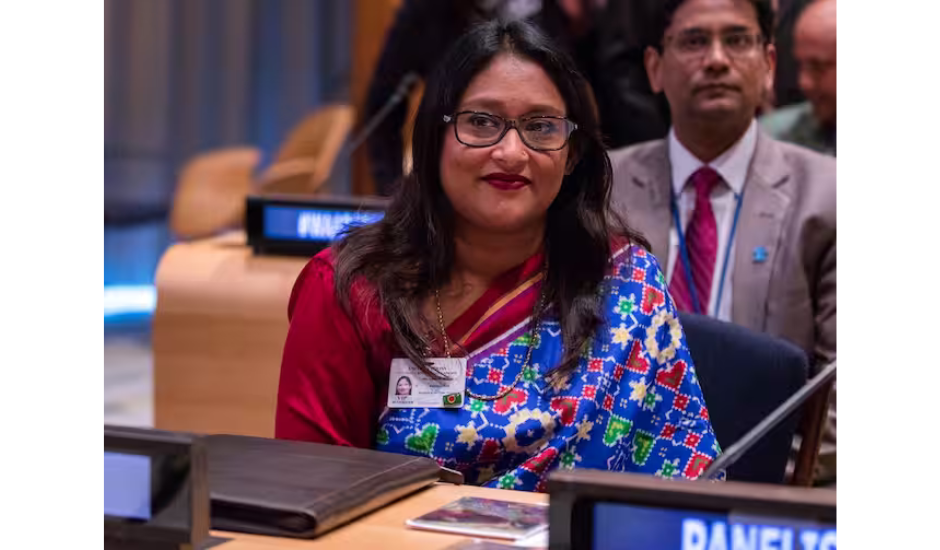
In a significant development, Bangladesh’s Prime Minister Sheikh Hasina’s daughter, Saima Wazed, has emerged as the victor in the closely-watched election for the top position in the World Health Organization’s (WHO) Southeast Asia Region. The election, which took place during a meeting in New Delhi, involved the participation of 10 member states of the South-East Asia Region of WHO eligible to vote.
Saima Wazed received an overwhelming eight votes, securing a decisive victory over her opponent, Shambhu Prasad Acharya, who was nominated by the Nepal government and garnered two votes. India’s longstanding support for the Bangladeshi candidate was an integral part of the election dynamics.
Southeast Asia, one of the six WHO regions, comprises 11 countries: Bangladesh, Bhutan, North Korea, India, Indonesia, the Maldives, Myanmar, Nepal, Sri Lanka, Thailand, and Timor Leste. The election of the regional director for this area holds significant importance in shaping public health policies and initiatives across the region.
The election process, marked by intense campaigning in recent weeks, underscores the intricate interplay of expertise in public health issues and geopolitical considerations. Such elections to multilateral bodies under the United Nations (UN) and WHO often involve countries seeking support for their candidates in exchange for backing other nations in various UN or WHO-related matters.
Saima Wazed is renowned for her work in the field of autism and her instrumental role in updating Bangladesh’s public health-related regulations. She played a pivotal role in the enactment of the country’s Mental Health Act of 2018 and the National Mental Health Strategic Plan for 2020-25.
The nomination of Saima Wazed as the next regional director for Southeast Asia is a testament to her dedication to public health and the confidence and trust of the region in her leadership abilities. She is set to assume office on February 1, 2024, and her term will extend until 2028.
The current regional director, Poonam Khetrapal Singh, from India, has held the position since her unanimous re-election in 2018. Her tenure is significant as she is the first woman to occupy the post, and her leadership has left a lasting impact on the region’s public health landscape.
As Saima Wazed prepares to take on this vital role, the international community will be closely watching to see the impact of her leadership on public health initiatives and policies in the Southeast Asia Region.
Sources By Agencies
