


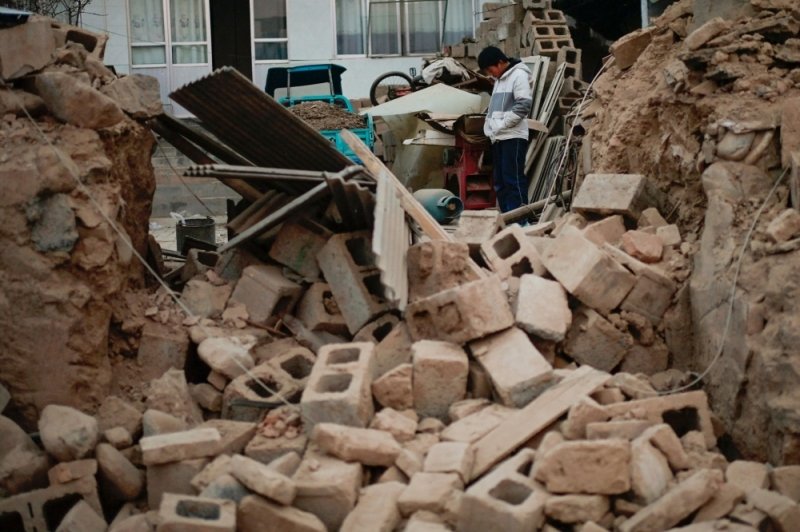
The aftermath of China’s most devastating earthquake in years continues to unfold, with the death toll climbing to 148, as reported by state media on Friday. The catastrophic quake, striking northwest China just before midnight on Monday, has claimed the lives of at least 117 people in Gansu province and 31 in the neighboring Qinghai region, according to the official Xinhua News Agency.
A staggering count of over 139,000 individuals has been relocated to emergency shelters across both provinces, with authorities diligently focusing on providing assistance to the displaced populace. State broadcaster CCTV highlighted the shift in rescue efforts, indicating that responders in Gansu are now directing their efforts towards resettling affected communities and tending to the injured.
While rescue teams concentrate on aid and relief, reports from Qinghai detailed ongoing searches for trapped victims, highlighting the critical and evolving nature of the rescue mission.
In Qinghai’s Zhongchuan township, the earthquake led to a distressing occurrence on Tuesday, known as a “sand boil.” This phenomenon, often experienced during earthquakes, results in soil liquefaction, causing sand and water to forcibly surge out of the ground, leading to tragic consequences.
The seismic event marked China’s deadliest earthquake since 2014, when over 600 lives were lost in the southwestern Yunnan province. The recent tremor, measured at 5.9 by the US Geological Survey, caused nearly 1,000 injuries across the affected regions. The aftermath has been punctuated by numerous aftershocks, adding to the already dire situation.
Challenges in aiding survivors have been compounded by subzero temperatures, making the relief operation notably arduous. Reports from AFP correspondents on the ground depicted survivors seeking warmth around open fires amid freezing conditions, underscoring the urgent need for aid and support in the wake of this natural disaster.
As the nation grapples with the aftermath of this catastrophic event, efforts remain steadfast in providing aid, ensuring shelter, and addressing the evolving needs of the affected populace.
Sources By Agencies
