


Bangladesh’s political landscape faces heightened tensions as the Chief Election Commissioner, Kazi Habibul Awal, announced that the country’s general elections will take place on January 7. The decision to hold voting in all 300 parliamentary constituencies on a single day has sparked a contentious standoff between the ruling Awami League, led by Prime Minister Sheikh Hasina, and the opposition Bangladesh Nationalist Party (BNP) under the leadership of former Prime Minister Khaleda Zia.
While Prime Minister Sheikh Hasina has assured the public of free and fair elections, the BNP has vowed to boycott the polls unless the government transfers power to a neutral caretaker administration. The opposition’s demand for a nonpartisan caretaker government to oversee the election process has been met with resistance from the ruling party, leading to escalating tensions across the nation.
The run-up to the elections has witnessed widespread demonstrations by the opposition demanding a neutral administration, resulting in violent clashes that have raised fears of instability in Bangladesh. Tragic incidents during protests, including the loss of lives and clashes between opposition supporters and law enforcement, have marred the pre-election period.
Chief Election Commissioner Awal, in a televised address, emphasized the necessity for consensus and peaceful solutions among political parties. “Consensus and solutions are needed,” he urged, calling upon all political entities to seek amicable resolutions and avoid conflict and violence.
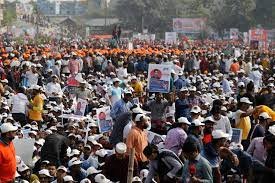
However, the ruling Awami League has welcomed the announcement of the election date, while the BNP has outright rejected the scheduled polling, labeling it as a “farcical election.” The opposition’s stance was evident during a massive rally in Dhaka on October 28, where they called for Hasina’s resignation. The rally turned violent, resulting in clashes with law enforcement and casualties.
Amidst the escalating tensions, international bodies including the United Nations, the United States, and the European Union have urged all parties to refrain from violence and collaborate in establishing conditions conducive to a free, fair, and peaceful election.
U.S. Ambassador Peter Haas, meeting with the ruling party’s General Secretary Obaidul Quader, delivered a letter emphasizing the need for dialogue to address the political crisis surrounding the election, highlighting the international concern over the situation in Bangladesh.
Bangladesh, a parliamentary democracy, faces a history of electoral violence, especially in the lead-up to and during elections. With Prime Minister Hasina eyeing a fourth consecutive term in power, the rift between the ruling party and the opposition intensifies, casting a shadow over the upcoming crucial electoral process.
Sources By Agencies
