


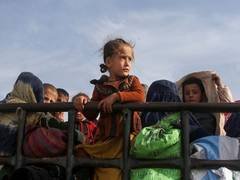
As the October 31 deadline for voluntary return of Afghan refugees expired, Pakistan’s Punjab province administration has transferred over 2,500 undocumented Afghan immigrants to transit camps from various parts of Attock for imminent deportation. This move comes during the biometric verification of illegal foreigners residing in the district.
The Caretaker Minister for Interior, Sarfraz Ahmed Bugti, has directed the relevant authorities to develop a comprehensive strategy for repatriating foreigners residing in Pakistan illegally.
While the deportation of Afghan refugees continues, Afghanistan’s Prime Minister, Mullah Mohammad Hassan Akhund, voiced his concerns over Pakistan’s actions, stating that they contravene international laws. In a video message, PM Akhund appealed to Pakistan to avoid expelling Afghans in an undignified manner, refrain from harassing them, and provide sufficient time for their return with dignity.
PM Akhund questioned Pakistan’s treatment of Afghan refugees, particularly regarding the handling of property and destruction of their homes, adding, “If their (Pakistan) reason is to expel undocumented migrants only, then why are they humiliating the refugees, stealing their property, and destroying their houses?” He also cautioned Pakistan about potential consequences resulting from the mistreatment of Afghan refugees and emphasized the importance of being a considerate neighbor.
On the international front, the United States expressed its desire for all nations to assist refugees and asylum seekers, with John Kirby, the US National Security spokesperson, calling for global support.
The United Nations Secretary-General’s Spokesman, Stephane Dujarric, appealed to Pakistan to continue safeguarding all “vulnerable” Afghans who sought safety within its borders.
The Pakistani caretaker government had previously set October 31 as the deadline for Afghan refugees to leave the country, affecting nearly 2 million individuals who faced the choice of voluntary departure or forced deportation. This decision led to widespread criticism from human rights organizations, who called for Islamabad to reconsider its planned actions.
Amid these developments, numerous Afghan refugees reported mistreatment by Pakistan’s police during their deportation. Abdul Rahim Mahajar, one Afghan refugee, criticized the harsh treatment, saying, “These people are being very cruel to us. If they had given us 4 or 5 months more, we could have spent the winter here in comfort.”
The controversy surrounding the treatment of Afghan refugees escalated when Afghanistan’s Taliban-appointed acting Defense Minister, Mawlawi Mohammad Yaqoob Mujahid, criticized the Pakistan caretaker government for its handling of the situation. He called on Pakistan to be more considerate and refrain from seizing personal property and assets belonging to Afghan refugees.
Sources By Agencies
